


Adele Brunet runs a one-location monument shop in Ormstown, Quebec. She serves about 80 cemeteries, and every order now goes into GordE.
Ormstown, Quebec
One location
April 2025
Cemetery monuments for couples and families, in many sizes. Pet memorials and garden stones on the side.
A handwritten order book, then Stonespot
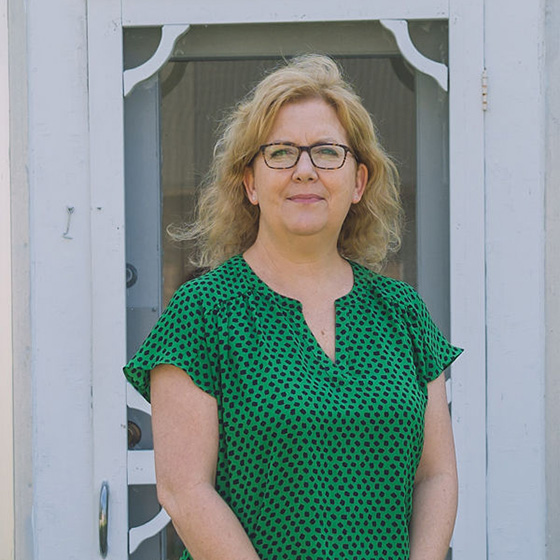
Before GordE, Adele wrote out every order by hand in an order book. She followed up with order numbers. If a number was not copied onto the order itself, she had to remember whether she had ordered the stone. “Everything had to stay in my head in terms of did I order it,” she says.
“The things I would think of at 3:00 in the morning, and wake up and have to write down on paper beside my bed because I would be like, ‘I’m going to forget this by tomorrow,’” she says.
Adele had already moved from the order book to another monument system, and she used it for about two years. “It was good, but it was too much for what I needed as a one location business,” she says.
Then she read an article in an industry magazine about a monument builder and the system he used. He had named it after Gord from the Tragically Hip, her favourite band. “That piqued my interest right away as a Canadian fan of the Tragically Hip.”
She called him. He said he was working on offering it to other shops. Adele says the tipping point was a mix of all of that: the name and a system that suited a smaller shop.
Brunet Monuments was started in 1876 by the brothers of Adele’s great-grandfather. They gave this location to their youngest brother and moved to Montreal to open a monument business of their own. It passed from her great-grandfather to her grandfather, then to her father in the late 1960s. Adele started there in 1996 and bought the business in 2006. Other than a pause during the war, it has kept running ever since.
Adele still has order forms from the early 1900s, filled out by her great-grandfather. “The basic form itself was very similar,” she says, to the one she used until she moved to software.
Nearly all of the work is cemetery monuments for couples and families, in many sizes. Adele puts it at about 98 percent. Pet memorials and garden stones are a sideline. Brunet serves about 80 cemeteries within roughly an hour of the shop. Most are small-town cemeteries looked after by volunteers. In September, the shop also completed a granite tribute to the women of a village in Quebec, made of blocks in different sizes, shapes and colours.
The team is small. Adele works with one full-time employee who does the sandblasting and two part-time employees on the installation truck, who work only when the weather is nice. Her son recently started at the shop, learning the business.
Adele was the only person who used her old system. She is the main GordE user, and her son now logs in for some tasks.
Moving over meant entering a lot of information: the cemeteries and the people at them, with contact information, plus her colours and shapes. “It went great. It was super easy,” she says. She did it in the winter. “I did the transition in the winter when things are slow or slower. Definitely a key. I wouldn’t want to be doing all that while it was busy season.”
Adele enters each order herself. “When the client sits in front of me, I directly enter the order into GordE.”
From there she follows it through inbound items, where she can see what she is still waiting for. When everything has arrived, the order moves to production, where the stencil is cut and the approvals are done.
She prints the setting ticket and sends it with the installation crew. “All the information is there for contact, addresses. When you have 80 different cemeteries, the guys get used to where they’re going, but it’s nice to have that backup.”
Invoicing and purchase orders happen in GordE too. “Invoicing is fantastic. My bookkeeper loves this so much better than me keeping track of everything by hand.” Once accounting is done with an order, she sends the purchase order to her manufacturers directly from GordE.
Her cemeteries do not really use contractors, so she does not use that part. “There’s things that I don’t use, but there’s things that I would be lost now without, for sure.”
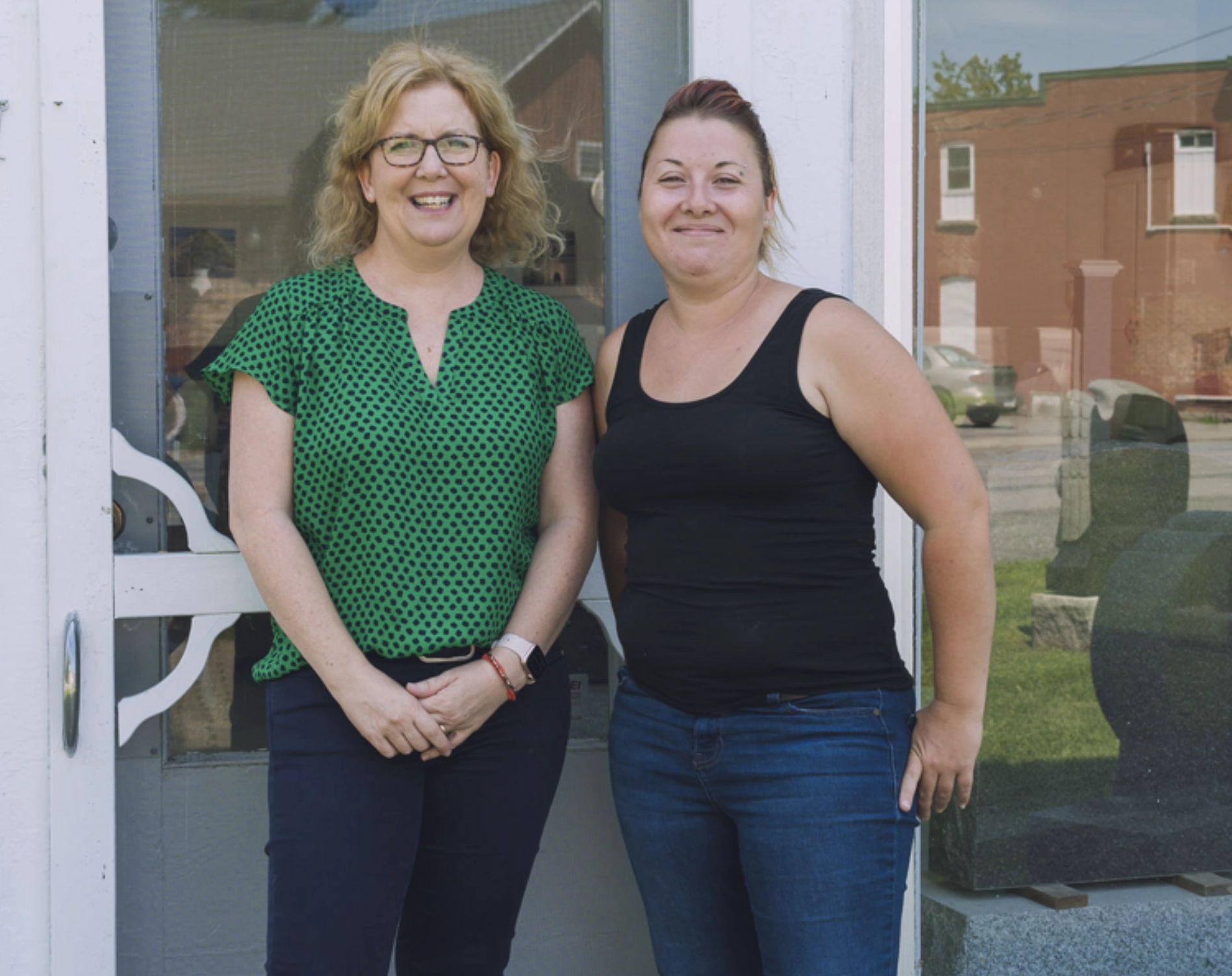
Adele can see whether the stone has arrived. “If a client calls, I know, well, if the items aren’t even here yet, there’s no way it’s going to be installed within the next week or 10 days.”
Adele cannot put an exact number on it. She says it saves her at least 5 hours a week, and settles on about 10. That is compared with doing everything by hand, not with her last system. “I can put my time better elsewhere.”
Before, Adele kept no detailed reports, only a year-end summary. Now she uses the reports section to compare new sales with last year. “I really like the report section too. It helps me just see how I’m doing in terms of the year before.”
Adele knows many monument builders who keep track of their work in Excel. Her advice is to choose something made for monuments. “Monument making is a very specific business.” Families do not come back often, she says, so there is not much of a client list to keep. The thing to keep track of is the stone itself. “In terms of just keeping track of the stone itself as it goes through, it changes your business.” And: “To me, I can’t imagine trying to use something that’s set up for other types of business in a monument field.”
For over a century, Brunet’s orders were written on paper. Now they live in GordE.
Want to see how an order moves through GordE? Book a short walkthrough.